

For modern enterprises, the question is no longer whether to undergo digital transformation, but which IT infrastructure model can best support operational efficiency, scalability, and long-term business growth.
The right infrastructure foundation not only ensures stable operations but also directly impacts security, scalability, flexibility, and the ability to adapt to evolving market demands.
However, there is no one-size-fits-all solution. Each organization has different requirements depending on:
- Operational scale
- Security and compliance needs
- Investment budget
- Scalability expectations
- And long-term technology strategy
Today, the five most common IT infrastructure deployment models include:
1. On-Premise
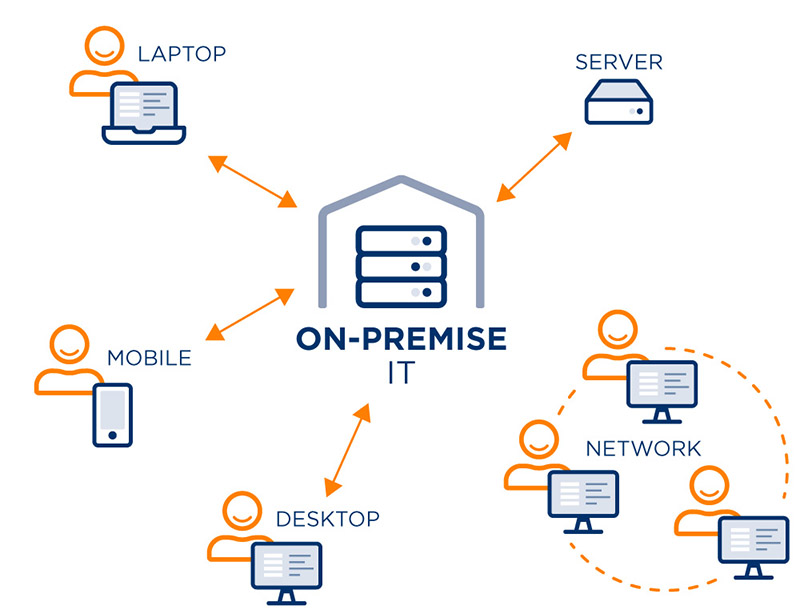
On-Premise is the traditional infrastructure model where servers, storage, and networking systems are deployed and managed directly within the organization.
This model offers the highest level of control over data, performance, and security. As a result, it remains a preferred choice for industries such as finance, banking, manufacturing, and organizations handling highly sensitive data.
However, it also requires significant upfront investment, longer deployment time, and a capable in-house IT team for ongoing operations.
2. Public Cloud
Public Cloud leverages infrastructure provided by major cloud vendors such as AWS, Microsoft Azure, and Google Cloud.
Its biggest advantages are rapid deployment, flexible scalability, and optimized upfront costs through a pay-as-you-go model.
This approach is particularly suitable for startups, SMEs, and organizations that require fast deployment and high flexibility.
That said, businesses must carefully consider data governance, vendor dependency, and long-term cloud cost management.
3. Private Cloud
Private Cloud is a dedicated cloud environment designed exclusively for a single organization, providing enhanced control and data security.
The infrastructure can either be hosted within the company’s own data center or managed by a specialized service provider.
This model is commonly adopted by enterprise organizations in sectors such as finance, healthcare, and manufacturing, especially those with strict compliance requirements.
In exchange, Private Cloud often involves higher infrastructure and operational costs.
4. Hybrid Cloud
Hybrid Cloud has become one of the most strategic infrastructure models for modern enterprises.
By combining On-Premise or Private Cloud environments with Public Cloud platforms, businesses can maintain critical systems internally while still benefiting from the scalability and flexibility of cloud computing.
This model is increasingly popular among FDI enterprises, factories, smart buildings, and multi-site organizations in Vietnam.
Hybrid Cloud is especially suitable for businesses looking to:
- Balance security and scalability
- Optimize investment costs
- And implement digital transformation gradually

5. Multi-Cloud
Multi-Cloud refers to the strategy of using multiple cloud platforms simultaneously to optimize different workloads and business needs.
For example:
- AWS for application infrastructure
- Microsoft Azure for Microsoft ecosystems
- Google Cloud for AI and big data workloads
This model helps organizations avoid vendor lock-in while increasing operational flexibility.
However, managing and integrating multiple cloud environments can become significantly more complex, especially for large-scale enterprises operating across multiple regions.
Comparison of the 5 IT Infrastructure Deployment Models
| Model | Key Advantages | Key Challenges | Level of Control | Initial Cost | Best Suited For | Management Complexity |
| On-Premise | High security and full data control | High upfront investment and slow deployment | Highest | Very High | Banks, Government Organizations, and Large Enterprises with Sensitive Data | Medium |
| Public Cloud | Fast deployment, high flexibility, and scalable pay-as-you-go pricing | Vendor dependency and potential security risks | Low | Low | Startups, SMEs, and Mid-sized Businesses | Low |
| Private Cloud | High security and customization | High costs and continued infrastructure investment requirements | High | High | Finance, Healthcare, Manufacturing, and Enterprise Organizations | Medium to High |
| Hybrid Cloud | Optimized flexibility with balanced cost and security | More complex management | High | Medium | FDI Enterprises, Factories, Smart Buildings, and Multi-site Organizations | High |
| Multi-Cloud | Avoid vendor lock-in and optimize for specific workloads | Highly complex management and high hidden costs | Medium | Medium | Large Enterprises using AI, Big Data, and ERP Systems | Very High |
IT Infrastructure Trends in 2026
According to current market trends, Hybrid Cloud and Multi-Cloud are becoming the preferred strategic choices for many enterprise and FDI businesses.
These models not only improve operational efficiency but also help organizations:
- scale more flexibly
- enhance data security
- optimize long-term operational costs
- and accelerate digital transformation initiatives
Many enterprises are gradually transitioning from pure On-Premise environments to Hybrid Cloud architectures to build more flexible and future-ready infrastructure foundations.
Netcab — Empowering Modern Enterprise Infrastructure
At Netcab, we support businesses in consulting, designing, and deploying IT infrastructure models tailored to their operational requirements and long-term growth strategies.
Our core solutions include:
- Structured Cabling & Network Infrastructure
- Data Center & Server Room
- Cloud Migration & Hybrid Cloud Solutions
- Managed Services & Cyber Security
A well-designed infrastructure foundation not only ensures stable operations but also creates long-term scalability and competitive advantage for businesses.
Contact us