

Good switches. Good Access Points. Good firewalls. Yet the network is still slow, connections still drop, and performance remains unstable.
In many cases, the issue may not be with the network equipment itself, but with a less visible component behind the entire system: Structured Cabling – the physical infrastructure that connects the network.
Cables run inside walls, along cable trays, behind racks, and often become almost invisible once a project is completed. However, a poor termination, excessive signal loss, or improper installation can affect the overall performance of the network.
“A link” does not necessarily mean “a compliant cabling system.”
This is where Testing & Certification plays an important role in verifying the actual quality and performance of the cabling infrastructure.
Structured Cabling – The Foundation Behind the Network
Structured Cabling is more than simply selecting a high-quality cable.
A complete cabling system includes cables, patch panels, connectors, patch cords, terminations, routing, and other associated connection components. The performance of a transmission link depends on the entire system and how it is installed, not just the cable itself.
During installation, several issues can affect transmission performance, including:
- Improper termination.
- Excessive untwisting of cable pairs at termination points.
- Incorrect wire sequence or termination configuration.
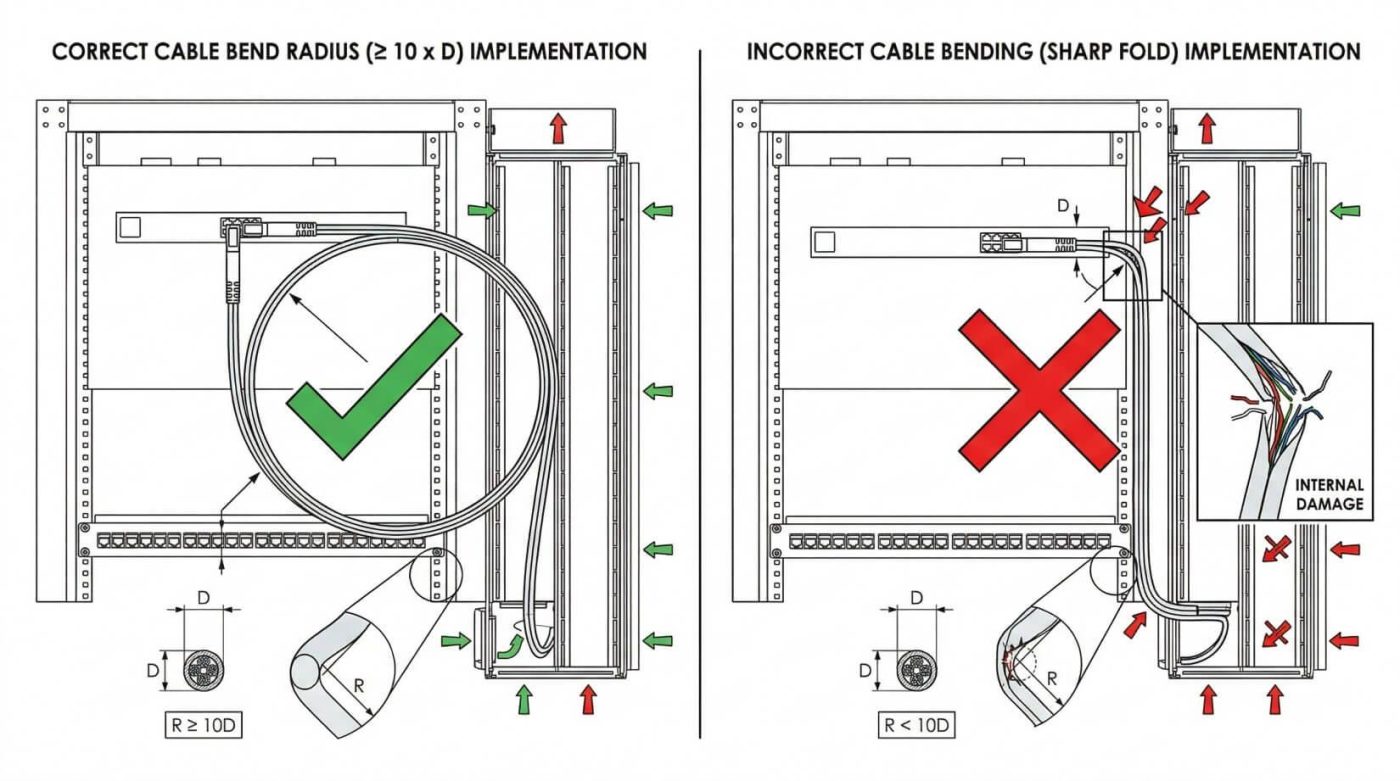
- Cable bends exceeding the recommended bend radius.
- Excessive pulling tension, compression, or mechanical stress.
- Improper cable routing.
- Data cables installed too close to power sources or sources of interference.
- Incompatible or mismatched connection components.
- Cable runs exceeding the allowable length for the deployed configuration.
The important point is that not all of these issues can be identified through visual inspection alone.
A cable may still establish a link and transmit data, but that does not necessarily prove that the link meets the requirements of the specified Category/Class.
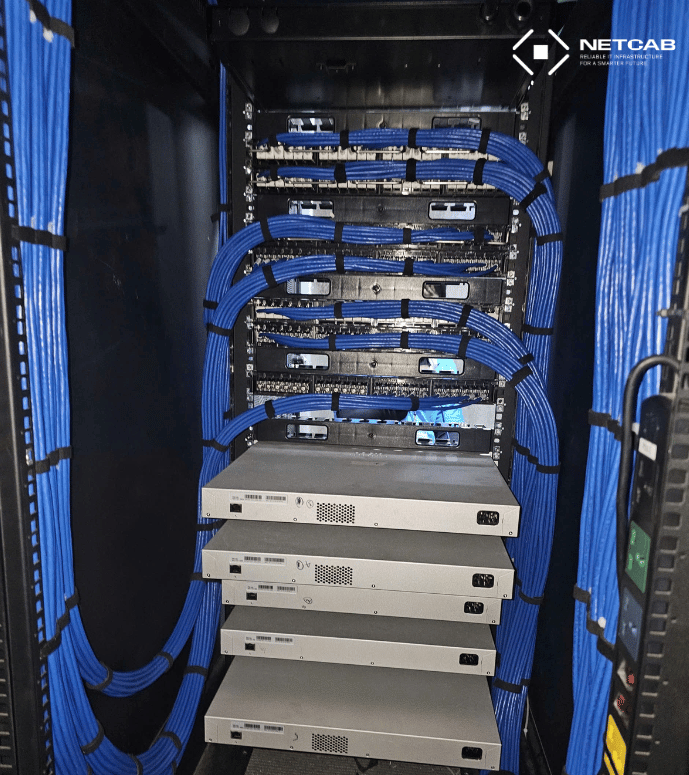
“A Link” Does Not Mean “Compliant”
This is one of the points that is often overlooked during cabling system acceptance.
Simply connecting a cable and checking whether a network connection is established only confirms that the connection is functioning at a basic level.
Testing & Certification, on the other hand, evaluates the transmission characteristics of the cabling link and compares the measured results against the limits defined by the applicable standard or required Category/Class.
In other words:
A basic link test answers:
“Can the device establish a connection?”
Certification Testing answers:
“Does the cabling link meet the technical requirements of the specified configuration and applicable standard?”
This distinction becomes particularly important in projects with hundreds or thousands of connection points.
What Does Testing & Certification Measure?
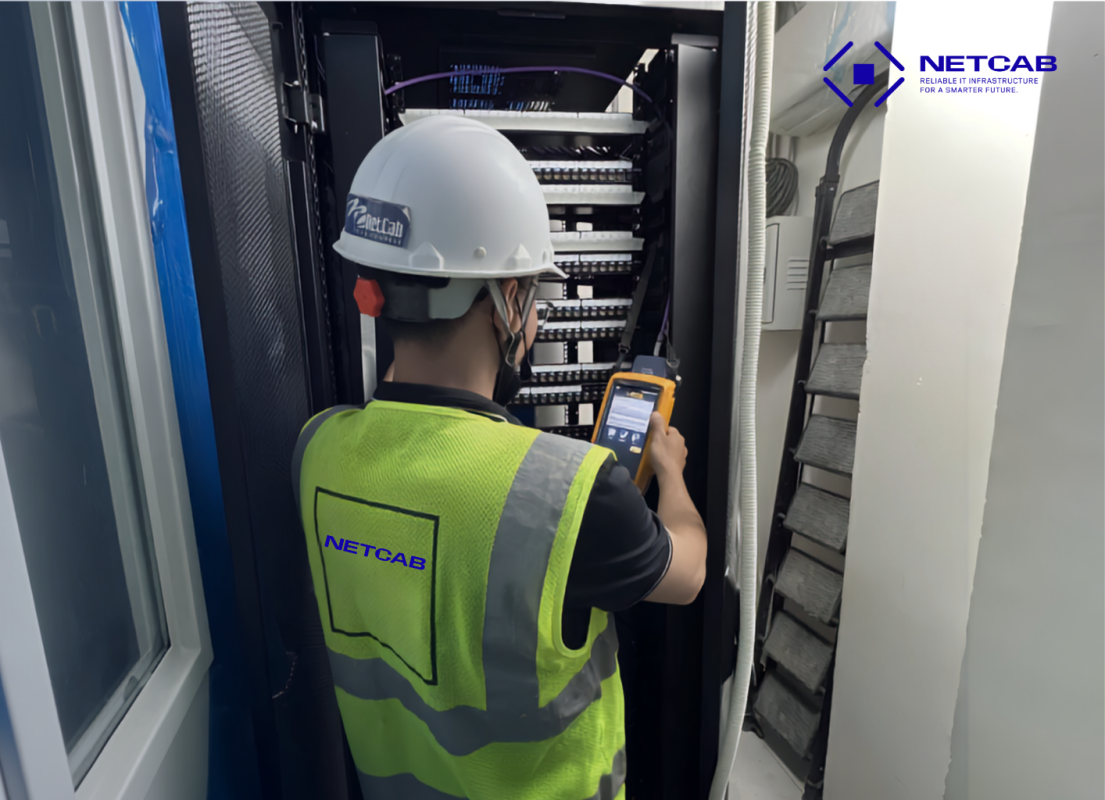
For copper cabling systems, depending on the applicable standard and test limits, certification testing may evaluate a range of transmission parameters.
Wire Map
Checks the wiring configuration of the cable pairs and identifies issues such as open, short, reversed pair, or split pair.
Length
Determines the electrical length of the link and verifies whether it complies with the applicable limits for the deployed configuration.
Insertion Loss
Measures the amount of signal loss as the signal travels through the cable and connection components. Excessive loss can affect signal strength and transmission performance.
NEXT – Near-End Crosstalk
Measures crosstalk between cable pairs. Controlling NEXT is important for maintaining reliable transmission performance in copper cabling systems.
Return Loss
Measures signal reflection caused by impedance discontinuities along the transmission path. Issues at connection points or mismatched components can affect the result.
Propagation Delay & Delay Skew
Depending on the applicable standard, the system may also be evaluated for signal propagation time and the difference in propagation time between cable pairs.
These parameters cannot be verified simply by plugging in a cable and confirming that the network is working.
Why Can a High-Quality Cat.6A Cable Still Fail Certification?
A common assumption is:
“If we use high-quality Cat.6A cable, the system should automatically pass.”
In reality, it is not that simple.
A Structured Cabling system is a combination of materials + design + installation + termination + connectivity + installation environment.
For example, during installation:
- The cable may be bent beyond the recommended limit.
- Cable pairs may be excessively untwisted during termination.
- Terminations may not be performed correctly.
- Cables may be compressed or subjected to excessive pulling tension.
- Routing may not be appropriate.
- Data cables may be installed too close to sources of interference.
- Connection components may be incompatible or improperly matched.
All of these factors can affect the final test results.
Therefore, selecting the right materials is only the first step.
A compliant cabling system requires:
Proper Design → Suitable Materials → Correct Installation → Testing & Certification
The actual quality of the system should be demonstrated through measured test results, rather than relying solely on the cable brand or the specifications stated on the cable itself.
Testing & Certification Is More Than an Acceptance Requirement
Testing is sometimes treated as the final step required to complete project acceptance and handover documentation.
In practice, the value of Testing & Certification goes much further.
Testing can help identify links that do not meet requirements before the system enters long-term operation.
A typical process may follow:
Installation → Testing → Identify Fail → Troubleshooting → Re-test → Certification
When a link fails, the test results provide technical data that helps the engineering team identify the area requiring inspection and corrective action.
After the issue is resolved, the link can be re-tested to verify the result before final acceptance.
This approach helps reduce the risk of putting a non-compliant cabling system into operation.
Test Reports – Technical Data for the System Lifecycle
A Test Report is not only valuable at the time of project handover.
During operation, when the system is expanded or a connectivity issue occurs, the original certification data can provide a useful reference for troubleshooting and assessing changes in the infrastructure.
For example:
“Did this cable link pass certification when it was handed over?”
If the original certification result passed, the engineering team can investigate other elements of the system.
If the link failed from the beginning, the issue can be traced back to the installation process to identify the cause and determine the appropriate corrective action.
For projects with hundreds or thousands of connection points, Test Reports provide clear technical records for individual links, rather than relying solely on visual inspection or manual records.
When Should Testing & Certification Be Performed?
Testing & Certification should be considered at different stages of the system lifecycle, particularly in the following situations:
For New Projects
- Acceptance of a new network cabling system.
- Deployment in offices, factories, hotels, schools, or commercial facilities.
- Deployment of Cat.6/Cat.6A cabling systems.
- Projects requiring certification according to project specifications.
- Technical documentation required for handover and warranty purposes.
For Existing Systems
- Frequent connection drops or unstable data transmission.
- Expansion of connection points.
- Changes to racks or patch panels.
- Cabling system upgrades.
- Assessment of existing cabling infrastructure before a network upgrade.
A Stable Network Starts with the Right Infrastructure
A reliable network does not depend solely on high-quality switches, firewalls, or Access Points.
Behind these active devices is the physical connectivity infrastructure on which the entire network depends.
To build a cabling system capable of supporting reliable long-term operation, every stage needs to be properly controlled:
Design → Supply → Installation → Termination → Testing & Certification → Documentation
Because:
“A link” does not necessarily mean “a compliant cabling system.”
Testing & Certification gives businesses a clear technical basis for verifying infrastructure quality before the system enters operation, while also creating valuable data for future troubleshooting, maintenance, and expansion.
Netcab – Structured Cabling & ICT Infrastructure
Netcab JSC provides Structured Cabling & ICT Infrastructure solutions for factories, offices, hotels, schools, and enterprise facilities.
Our scope covers:
Design → Supply → Installation → Termination → Testing & Certification → Documentation
From Cat.6/Cat.6A copper cabling systems to fiber optic backbones, Netcab focuses on delivering infrastructure that meets technical requirements and supports reliable long-term operation.
Planning a new project or need to assess your existing cabling infrastructure?
Contact Netcab to discuss the right solution for your facility.
Netcab JSC
Smart ICT & ELV Solutions | Industry-Ready | Trusted by Industry Leaders