

Why Do Many Businesses Only Notice Infrastructure Problems When Systems Become Overloaded?
In many organizations, IT infrastructure issues do not immediately appear as critical failures. Instead, they gradually reduce operational efficiency over time — from slow network performance and unstable connectivity to disruptions during online meetings and inconsistent data access.
Because systems may still appear functional on the surface, these issues are often underestimated. However, over time, they can directly affect employee productivity, internal user experience, and overall business continuity.
For B2B enterprises that heavily rely on data, connectivity, and uninterrupted operations, repeated minor disruptions can create far greater operational costs than expected.
Signs Your IT Infrastructure May Be Experiencing Problems
In reality, many businesses encounter situations such as:
- Slow internal network performance during peak hours.
- Unstable Wi-Fi connectivity in certain working areas.
- Frequent lagging or disconnections during online meetings.
- Inconsistent access to internal data systems.
- Network devices becoming overloaded as the number of users increases.
Although these may not be considered “major incidents,” they often indicate that the infrastructure is gradually losing the stability required for long-term operations.

Commonly Overlooked Causes of IT Infrastructure Issues
In many cases, the root cause does not come from software or end-user devices, but from the underlying infrastructure layer itself. These issues are often difficult to detect immediately because the system may still operate at a basic level.
Some businesses deploy structured cabling systems that do not fully comply with TIA/EIA or ISO/IEC standards, while network topology may not be optimized for actual user density and operational demands. In addition, the lack of monitoring, preventive maintenance, or long-term scalability planning can cause systems to degrade over time.
At the physical layer, poor cable routing and improper equipment placement can increase the risk of signal interference, attenuation, or backbone overload as data transmission demands continue to grow.
Although these factors are often overlooked during the early stages, they ultimately determine the overall performance and stability of enterprise IT systems.
How Weak Infrastructure Affects Business Performance
When IT infrastructure lacks stability, the impact extends beyond technical issues and directly affects overall business operations.
Employees may spend more time dealing with slow system responses or unstable connections. Internal communication and collaboration can also become less efficient, especially in environments that depend heavily on online meetings and real-time data access.
Over time, troubleshooting costs tend to rise significantly as businesses repeatedly address recurring issues instead of resolving the underlying infrastructure problems. At the same time, system scalability becomes increasingly limited as existing infrastructure can no longer support business growth.
For B2B enterprises where operational continuity is critical, these impacts can directly affect customer experience, project timelines, and overall business performance.
Why Is Structured Cabling Important in IT Infrastructure?
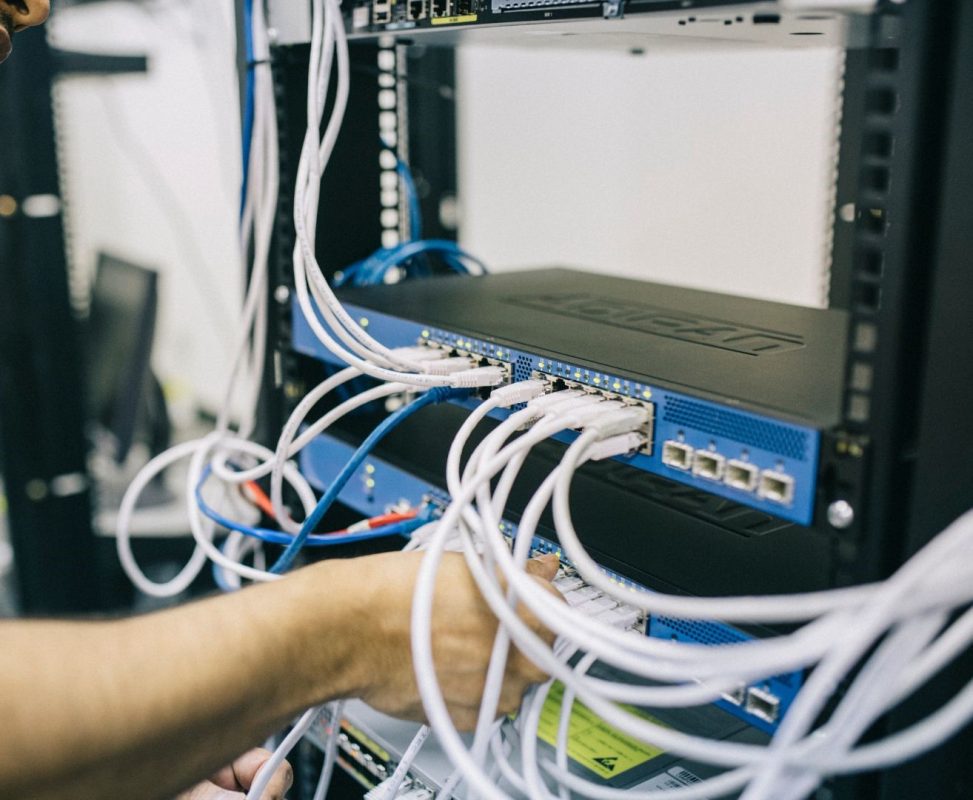
Within the overall IT infrastructure ecosystem, structured cabling serves as the foundational layer connecting all upper-level systems. If copper cabling, fiber optic backbone systems, or internal connectivity pathways are not properly designed and implemented according to standards, maintaining long-term operational stability becomes extremely difficult.
A high-quality structured cabling system should not only comply with international technical standards but also be designed for easy management, maintenance, and future scalability. In addition, optimized cable routing and deployment environments help reduce signal loss, minimize interference, and improve overall system performance.
For modern enterprises, investing in proper cabling infrastructure is not only about supporting current operational needs but also about building a foundation for long-term growth and digital transformation.

IT Infrastructure Should Be Considered a Strategic Investment
From an operational perspective, IT infrastructure should not be viewed merely as a technical component, but as a critical foundation supporting the entire business operation.
A properly designed and implemented infrastructure system helps businesses maintain operational stability, minimize disruptions, and optimize long-term maintenance costs. More importantly, it enables organizations to scale efficiently and adopt new technologies in the future.
As businesses become increasingly dependent on data, connectivity, and digital ecosystems, IT infrastructure is evolving from a supporting element into a strategic business foundation.
Netcab’s Perspective
Through extensive real-world project experience across multiple industries, Netcab has observed that most operational issues do not originate from a single incident, but rather from infrastructure that was not properly designed from the beginning.
Netcab specializes in Structured Cabling, Network Infrastructure, and ELV solutions implemented according to international standards such as TIA/EIA and ISO/IEC. Our goal is to help businesses build stable, flexible, and scalable infrastructure systems aligned with their operational and growth requirements.

Conclusion
Overlooked IT infrastructure issues may not cause immediate damage, but they can silently reduce operational efficiency if not identified and addressed early.
For B2B enterprises, investing in the right infrastructure from the beginning is always more sustainable than waiting for problems to occur before taking corrective action.
If your business is currently evaluating its network systems, structured cabling, or ICT infrastructure, early assessment can significantly reduce future downtime and upgrade costs.
Netcab is ready to support businesses with consulting, assessment, and deployment of ICT & ELV infrastructure solutions tailored to real operational needs.
Contact us